HKET Exclusive — From SEO to GEO: How Do Brands Build Credibility in the AI Era?
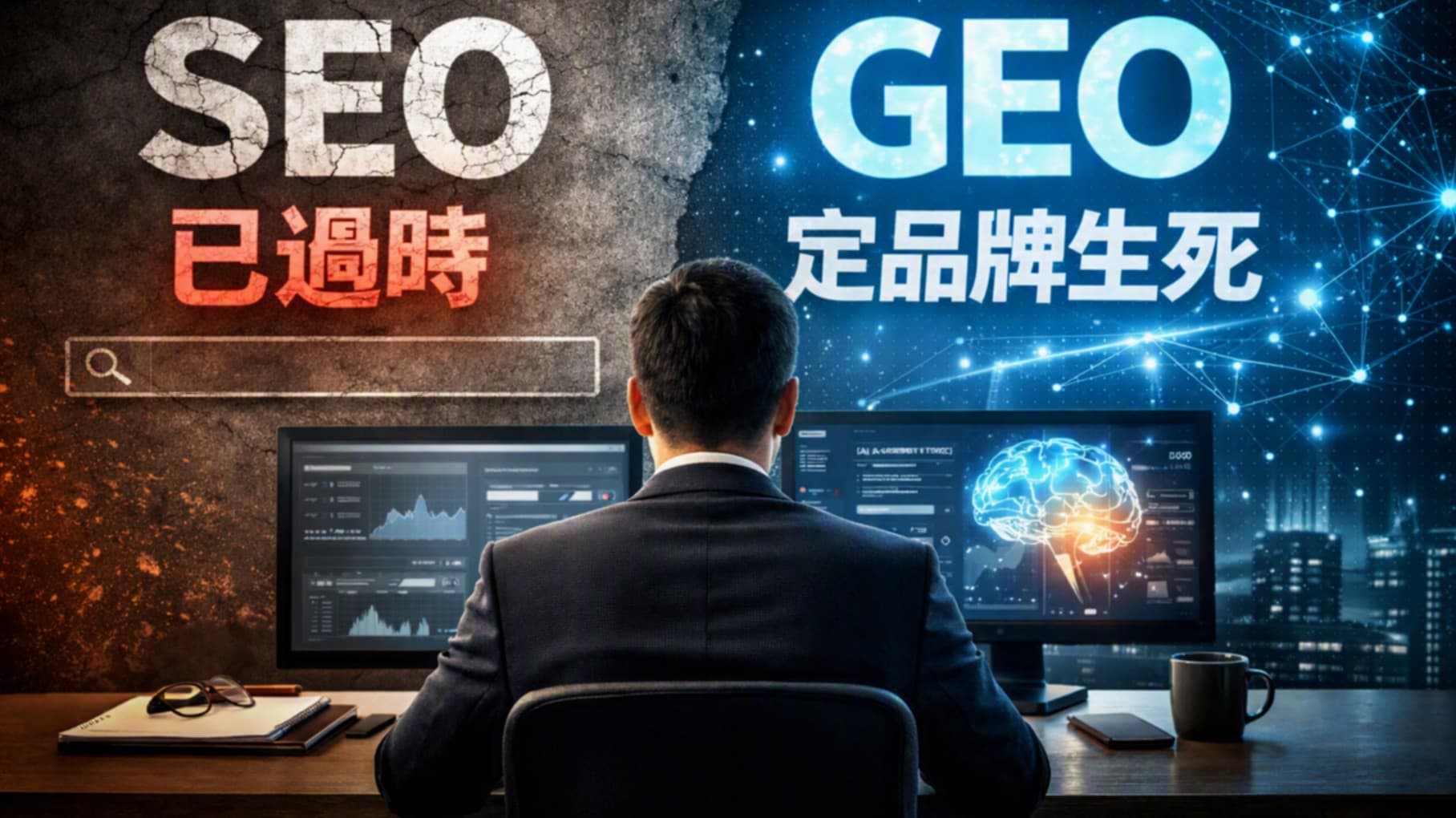
Propelled by social platforms and online retail, brands have long treated SEO as a priority in marketing and sales. But with the arrival of the AI era, SEO is increasingly seen as legacy practice. Getting GEO right — building a brand that AI can understand, trust and recommend — matters more.
Joseph Tang, founder and CEO of VM Bourgeois, an AI-native image asset consultancy, expects the competitive frontier for brands will no longer be simply being seen by people, but whether they can be correctly understood, believed and consistently recommended by AI.
VM Bourgeois has invested in and developed ximu, an AI-native image asset governance platform. Vitas Zhang, ximu's product lead, points out that AI has gradually reshaped the consumer purchase journey. Shoppers may now discover a new brand or product simply by asking an AI, develop an interest in it, and buy directly as a result. What brands need to think about today, therefore, is not only how to attract clicks, but how to establish credibility and a clear position within AI's semantic space.
Does SEO no longer matter?
With the rise of GEO (Generative Engine Optimization), has SEO become irrelevant? Neither Tang nor Zhang agrees. Zhang stresses that SEO is the foundational layer of GEO. When generating answers, AI still draws on external search tools and existing search systems; if a brand has not got the basics right — discoverability, data consistency, content structure — it will find it even harder to enter AI's answer frame.
That said, SEO only solves the problem of "being found," while GEO goes further and takes on the challenges of "being believed" and "being recommended." Brands therefore need to build a consistent, clear and AI-legible body of data across multiple sources: their own website, the media, social channels and internal records.
GEO looks more complex than SEO and demands more resources, which would seem to favor large enterprises — but Zhang disagrees, arguing that GEO may in fact open up a chance to overtake on the bend. As long as a company can identify where it has room to break through in a specific market, context or user question, SMEs also stand a chance of winning greater visibility in AI recommendations.
Govern the source, not the tail end
Of course, the world has many different large models, and companies large and small alike must assess their target markets, their languages and the AI tools their consumers mainly rely on, then build a strategy around the characteristics of the models in that market. Entering the mainland Chinese market, for instance, requires understanding how DeepSeek, Tongyi Qianwen and Doubao differ in their preferences for sources, media weighting and content structure.
Once a brand has mastered SEO and GEO, can it control the answers AI gives? Tang emphasizes that the essence of GEO is not controlling AI's answers, but governing at source the data that AI will encounter, interpret and cite.
He offers the metaphor of a reservoir. Every brand has one, fed by internal data, official website content, external media coverage, social discussion and third-party information. If what flows in is chaotic, outdated or self-contradictory, AI may end up citing content that is wrong, incomplete, or that the brand would rather not see amplified.
GEO, then, is about governance at the source rather than control at the tail end. Brands need to ensure their internal and external data is consistent, clearly structured and aligned with the way AI understands and cites information — so that what flows out of the reservoir is cleaner, more trustworthy and closer to the positioning the brand intends to present. ximu's proprietary STI (Seen & Trusted Index) allows companies to systematically assess brand visibility and trust through the lens of AI's answering and recommendation mechanisms. It lets them not only understand where their brand currently stands in the AI world, but also pinpoint with precision the key factors shaping that performance.
Accenture's recent "2026 Consumer Survey" found that 85% of Hong Kong respondents would be willing to let AI shop on their behalf, provided they remain in control. Tang sees the spread of personal AI agents as an unmistakable trend: in future, the first layer of search, comparison and purchase decisions is likely to take place between a consumer's personal agent and the large models sitting behind platforms and brands. All the more reason for brands to get the governance of their own data and semantic content right — so they don't lose the chance to be understood and recommended in that first round of AI-to-AI communication.