Is GEO Dead? Long Live Directed Growth
A perspective from ximu's CGO: the paradigm shift from being seen to being chosen
Many have called 2026 "Year One of GEO."
As Xinhua noted early this year, Generative Engine Optimization is rapidly emerging from the margins of marketing — opening a new battlefield where companies compete for user mindshare and for the conversational entry point of the AI era.
But we'd like to pour some cold water on the excitement.
GEO solves "being seen." It doesn't solve "where the growth is."
The essence of GEO — and its ceiling
At its core, GEO (Generative Engine Optimization) is about getting a brand into AI's cognitive system.
The move from SEO to GEO is a move from optimizing a web page's ranking in a search engine to raising a brand's visibility and recognition in what AI outputs.
That logic is sound. But it only answers the first question: how do you get AI to understand you?
It doesn't answer:
Which queries deserve priority?
Where are the perception gaps that need filling?
Where has a competitive advantage already formed that can be amplified?
Are the actions you're taking actually producing growth?
This is why so many GEO services stay stuck at the level of content operations — publishing, blasting, stacking — without ever being able to tell a company where its growth actually happens, query by query.
There's a more serious warning sign, too. GEO services are now sold for as little as RMB 1,000, promising brands priority placement in AI answers. Xinhua has pointed out that because GEO "injects" commercial information into AI-generated answers, users can't tell it apart the way they can recognize a traditional search ad — raising questions about consumers' right to know and right to choose. Artificially manipulating AI outputs may also trigger legal disputes over fairness. The "poisoned GEO" called out by CCTV's 3·15 consumer-rights gala is this problem in its worst form.
GEO is not a cure-all. It's a road you have to travel — but it isn't the destination.
ximu's answer: Directed Growth
ximu is a Directed Growth platform built for the age of AI-driven decisions.
Its core unit isn't share of voice. It isn't exposure. It isn't ranking.
It's the Query.
Step 1 · See
Using the query as the smallest unit, see how a company is understood, compared, and chosen across AI platforms (five major models: GPT, Gemini, DeepSeek, Doubao, and Qwen), markets, and countries.
Three core strengths make this possible: query-led precision monitoring, cross-model and cross-market comparison, and a direct path from data to decisions.
Step 2 · Find
Companies can pinpoint directly: which queries are worth going after, where the perception gaps are, and where a competitive advantage has already formed.
Step 3 · Act
ximu turns those signals into clear actions — what to strengthen, what to influence, what to prioritize. This isn't casting a wide net. It's Directed Growth aimed at the decision scenarios with the highest commercial value.
Step 4 · Assure
Continuously track how data changes at the query level to verify whether actions are truly producing growth. That lets companies find and amplify their competitive advantage faster, with less time and lower cost of trial and error — continuously comparable and executable across countries, languages, and AI platforms.
Why now: three irreversible numbers
68.01% — the zero-click rate of US Google searches.
17%–54% — how far the overlap between AI citations and search rankings has collapsed.
+54% — how much better AI-referred traffic converts than traditional channels.
The overlap between AI Overview citations and organic top-ten results fell from about 76% in mid-2025 to just 17%–54% in early 2026. Ranking first no longer guarantees being cited by AI.
At the same time, ChatGPT ads show a deep-conversion rate of roughly 10.5% per session — far above Meta's ~3% and TikTok's under 1%. Adobe data shows AI-referred retail traffic converts 54% better than average traffic.
What matters now: in every critical query an agent runs on a user's behalf, are you correctly understood — and consistently recommended?
ximu: your brand's semantic foundation in the AI world
A brand's own corpus. A brand's own context. A brand's own data sovereignty.
ximu doesn't chase platforms, doesn't watch keyword rankings, and doesn't run SERPs. The entire data architecture is built around one center: who the brand is.
In ximu, brands can answer a set of critical questions for the first time:
Is AI recommending me?
Why — and in which situations am I being replaced?
In which queries are competitors recommended while I'm not mentioned at all?
Behind this are ximu's three core metrics:
- STI (Seen & Trusted Index): a 0–100 score of how visible and trusted a brand is in AI.
- Visibility: Reach, mention Position, and content Focus.
- Sentiment: measured on a scale from −1 to 1.
And two analytical dimensions:
- Sources: which websites AI is citing.
- Queries: what users are actually asking AI.
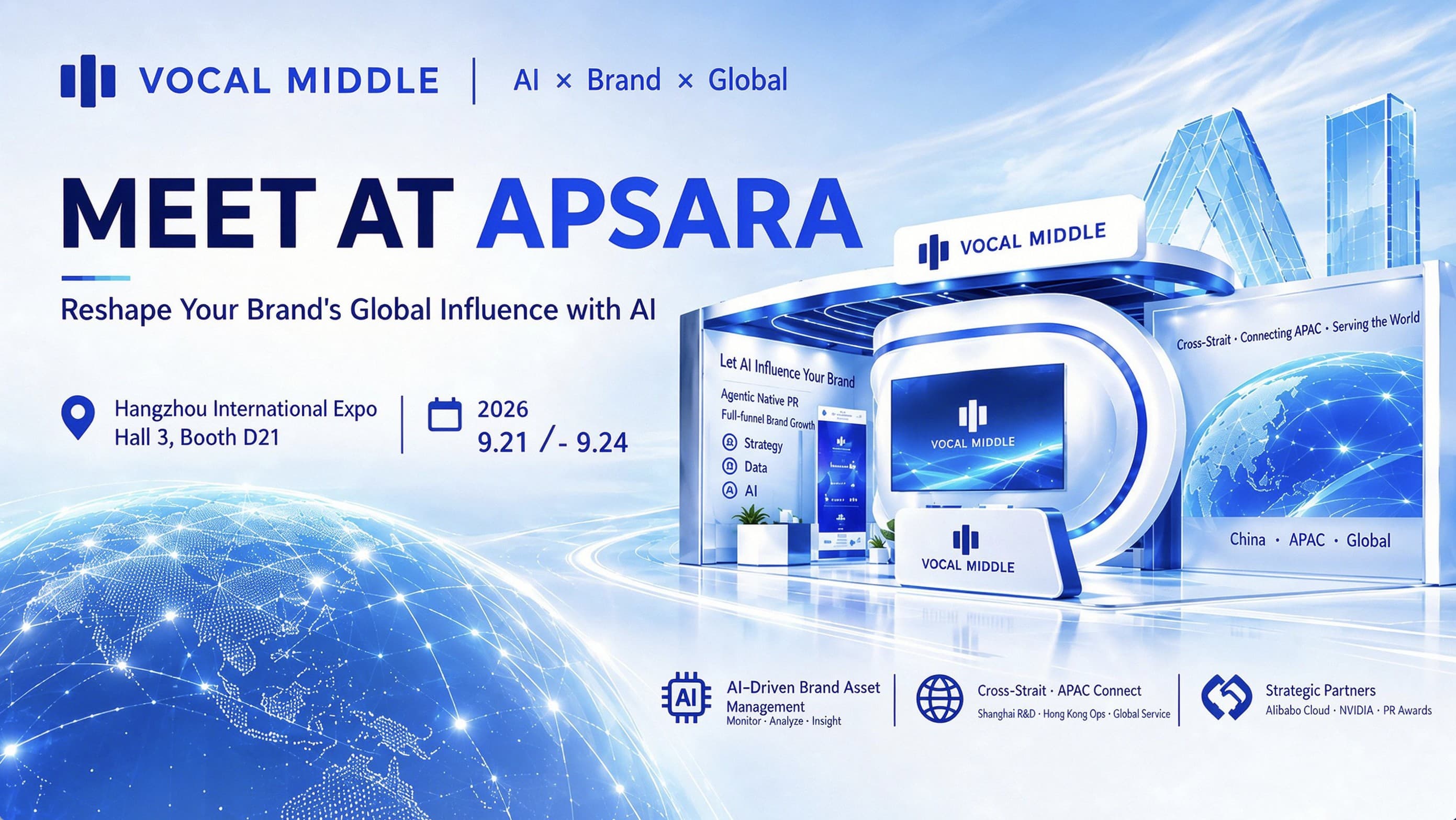
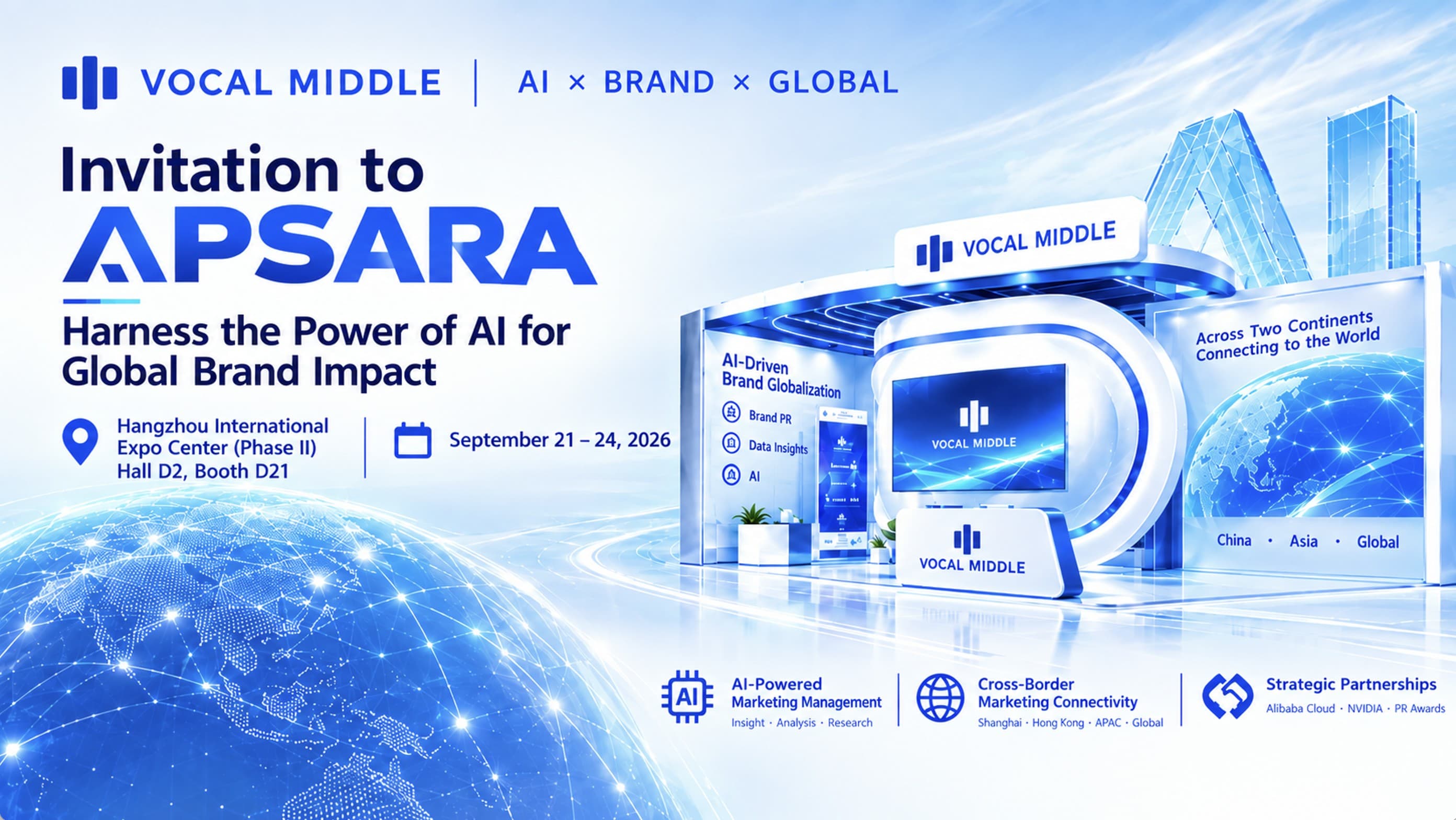
Coming up at Apsara Conference 2026
The 2026 Apsara Conference (Yunqi) is anchored on Agentic AI. Hall 3 · Super Creation Hall focuses on intelligent living across twenty key roles and a hundred everyday scenarios.
We believe that in the Agent Native era, brand decision-makers are exactly the role that most needs to be understood and recommended by agents — and that is what ximu, as an AI-Native Decision Platform, brings to the Creation Hall.
From September 22–24, find ximu at Hall 3, Booth D21, where we'll break down in full:
- Why the logic of growth has changed in the age of AI-driven decisions
- The paradigm leap from GEO to Directed Growth
- How query-level Directed Growth works in practice
- Before / After results from real client cases
Stop by Booth D21 for a 1:1 conversation with our team. On site, we'll walk you through pre-built case reports and a Query Mystery Box challenge — find out exactly which query, and which position, your brand holds in AI's eyes.
Decide what to change. Act. Prove what works.